

Your Brand is Disappearing: Have You Given AI Too Much Control?

AI should strengthen your brand’s voice—not slowly erase it.
A brand rarely disappears all at once.
It happens one decision at a time.
A distinctive headline is replaced with something safer. An original design is exchanged for something more familiar. A point of view is softened until it becomes universally acceptable—and completely forgettable.
Now, artificial intelligence can accelerate that process.
AI can produce a month’s worth of social content before lunch, generate dozens of design directions in minutes and turn a rough idea into polished copy almost instantly. Those capabilities can make creative teams faster, more productive and more resourceful. But there is a growing difference between using AI to assist a brand and allowing AI to define it.
When companies ask AI to remedy gaps in their brand strategy, voice or creative direction, they surrender more than control of a task. They risk surrendering the characteristics that make the company recognizable.The work may still look polished. It may sound professional. It may even perform reasonably well in the short term.
But each generic decision makes the brand a little less visible.
The Disappearance Happens Gradually
Generative AI is exceptionally good at recognizing and reproducing patterns. It has learned from enormous collections of existing language, imagery and ideas.
Ask it for a professional headline, an inspiring campaign or a modern website, and it can quickly produce something that resembles what successful communication is expected to look like.
That is precisely the problem.
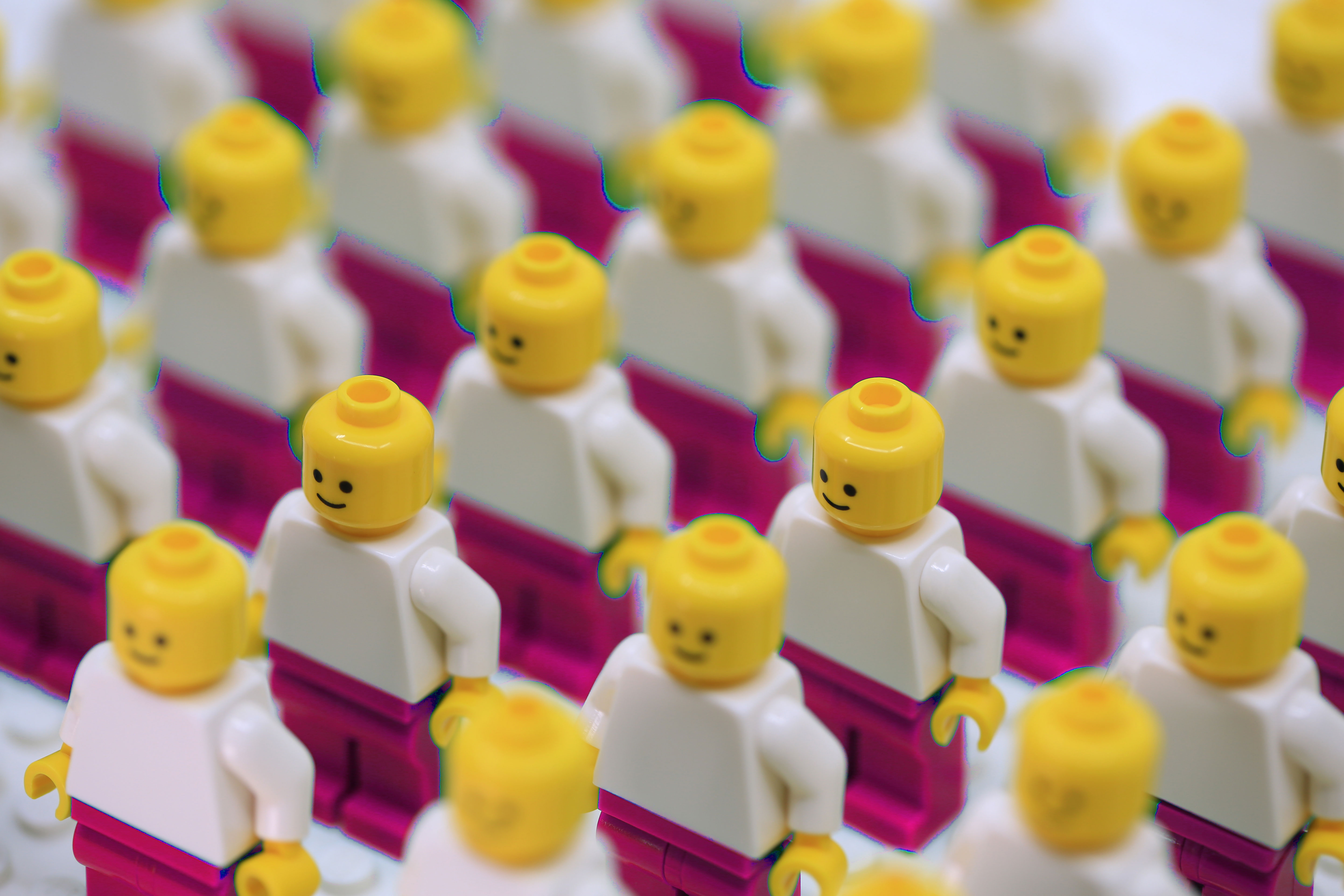
When many companies use similar tools with similar prompts, they receive variations of similar answers: familiar visual styles, predictable headlines, polished corporate language and the same safe emotional cues.
Nothing appears obviously wrong. The grammar is correct. The design looks current. The message checks every box.
Yet something important has disappeared.
The work could have come from almost any company.
Welcome to the Great Language Flattening
In her 2025 article “The Great Language Flattening,” published by The Atlantic, technology journalist Victoria Turk examines how AI-generated language may be influencing the way people write.
As the patterns favored by language models become increasingly common in emails, articles and marketing materials, human communication may begin moving toward a more standardized style.
For brands, this language flattening presents a serious risk.
When a company allows AI to determine its language instead of teaching AI how to support an established voice, it is not simply automating production. It may be replacing recognizable characteristics with the same polished patterns available to every competitor.
The danger is not that AI-generated communication is necessarily bad.
The danger is that it is frequently competent in exactly the same ways.
AI Can Improve the Work While Diluting the Brand
Emerging research reveals a creativity paradox.
A 2025 study comparing human and AI-generated writing found that although AI could produce strong individual work, its output became increasingly homogeneous when viewed collectively. Each additional human-written piece introduced more new ideas than each additional AI-generated piece. The diversity gap grew as more examples were added—and instructions to make the AI more creative did not eliminate the effect. (“Homogenizing Effect of Large Language Models on Creative Diversity”)
Other research has identified a similar pattern: generative AI can improve an individual’s creative performance while reducing the collective diversity of ideas produced by a group. (Nature Human Behaviour)
For brands, that paradox should be a warning.
AI may improve the quality of an individual advertisement, email or social post while gradually reducing the distinctiveness of the overall brand.
Every piece may become more polished. The brand itself may become less memorable.
Your Brand Is Not a Prompt
A brand voice is not simply a preferred writing tone. It is the accumulated expression of a company’s beliefs, personality, history, culture and point of view. It lives in the words a company chooses—and the ones it refuses to use. It is present in its sense of humor, visual instincts, willingness to challenge convention and the way it responds when something goes wrong. Those qualities cannot be manufactured by selecting “friendly,” “bold” or “innovative” from a list of adjectives. AI can imitate the visible characteristics of a voice. It should not be responsible for deciding what the brand believes. That direction must come from people who understand the company, its customers and the reason it deserves to exist.
If a company has not defined those things, AI will fill the gaps with probability. It will offer the language and imagery most likely to fit the category—not necessarily the communication most capable of distinguishing the brand.
AI does not have to make the wrong choice to weaken a brand. It only has to keep making the most predictable one.
The Hidden Cost of Blending In
The attraction of AI is understandable. It can reduce production time, increase output and make creative resources more accessible. These are real and valuable benefits.
But producing more content is not the same as building a stronger brand.
Research from the Ehrenberg-Bass Institute emphasizes the importance of distinctive brand assets: recognizable elements that become uniquely associated with a company. Consistent colors, language, imagery, characters, sounds and other signals help people identify a brand in a cluttered environment.
(Ehrenberg-Bass Institute for Marketing Science)
When companies allow AI-generated conventions to replace those signals, they may save money during production while creating a more expensive problem: becoming invisible.
A brand that sounds and looks like everyone else must work harder to earn the same amount of attention. That can mean purchasing more media, generating more impressions, publishing more content and launching campaigns more frequently. The money saved by automating creativity may eventually be consumed by the cost of compensating for weak recognition.
Sameness carries a media tax.
How Much Control Have You Given Away?
The answer is not to reject artificial intelligence. Used thoughtfully, AI can become an extraordinary creative partner. It can help teams:
- Explore alternatives ways to express established ideas.
- Organize research and identity useful patterns.
- Develop early concepts for human evaluation.
- Adapt approved communication for different formats.
- Examine whether copy follows established brand principles.
- Handle repetitive production work so people have more time for original thinking.
The important distinction is authority.
Who established the idea?
Who made the creative judgment?
Who decided what sounded right?
Who protected the brand when the safest answer was not the most distinctive one?
If the answer to each question is AI, the company may no longer be using a tool. It may be outsourcing its identity.
AI should be able to explain how an execution supports the brand. It should not be inventing the brand every time someone enters a new prompt.
Make the Brand Clear Before Making More Content
Before asking AI to create anything, a company should be able to answer a few very human questions:What do we believe that our competitors do not?
What would we say even if it were not the safest or most predictable thing to say?
Which parts of our personality should never be polished away?
Which visual and verbal characteristics are unmistakably ours?
What could someone see, hear or read and immediately recognize as coming from us?
If those answers are unclear, generating more communication will not solve the problem. It will simply spread the uncertainty faster.
The stronger the brand foundation, the more effectively AI can support it. The weaker the foundation, the more likely AI is to replace it with something familiar.
Do Not Let Efficiency Erase Identity
As AI makes polished communication abundant, polish alone will lose some of its power.
The scarce qualities will be judgment, conviction, taste, lived experience and a recognizable point of view.
In other words, the things that make a brand human.
The companies that remain distinctive will not necessarily be the ones that avoid AI. They will be the ones that know what must never be delegated to it.
They will use AI to accelerate execution without allowing it to determine identity. They will protect the unusual choices, imperfections and convictions that give people something to recognize and remember.
The future will not necessarily belong to the brands that generate the most content. It will belong to the brands people can still identify when everyone has access to the same tools.
Your brand will not disappear because you used AI.
It will disappear if, little by little, you allow AI to make every decision that once made the brand yours.
References:
- Turk, Victoria. “The Great Language Flattening.” The Atlantic, April 29, 2025.
- “Homogenizing Effect of Large Language Models on Creative Diversity:
An Empirical Comparison of Human and ChatGPT Writing.”Computers in Human Behavior: Artificial Humans, 2025. - Meincke, Lennart, Gideon Nave and Christian Terwiesch. “ChatGPT Decreases Idea Diversity in Brainstorming.” Nature Human Behaviour, 2025.
- Ehrenberg-Bass Institute for Marketing Science. “Distinctive Asset Measurement.”



Joining Roly and Richard is Jordana Foster, CEO of Ready, Set, Go Beyond, business and executive coach, leadership and communication trainer, and returning guest. Together, they discuss why leadership is a mindset, how honest conversations can help teams navigate uncertainty, and why creating space for people to speak openly must go hand in hand with taking action.
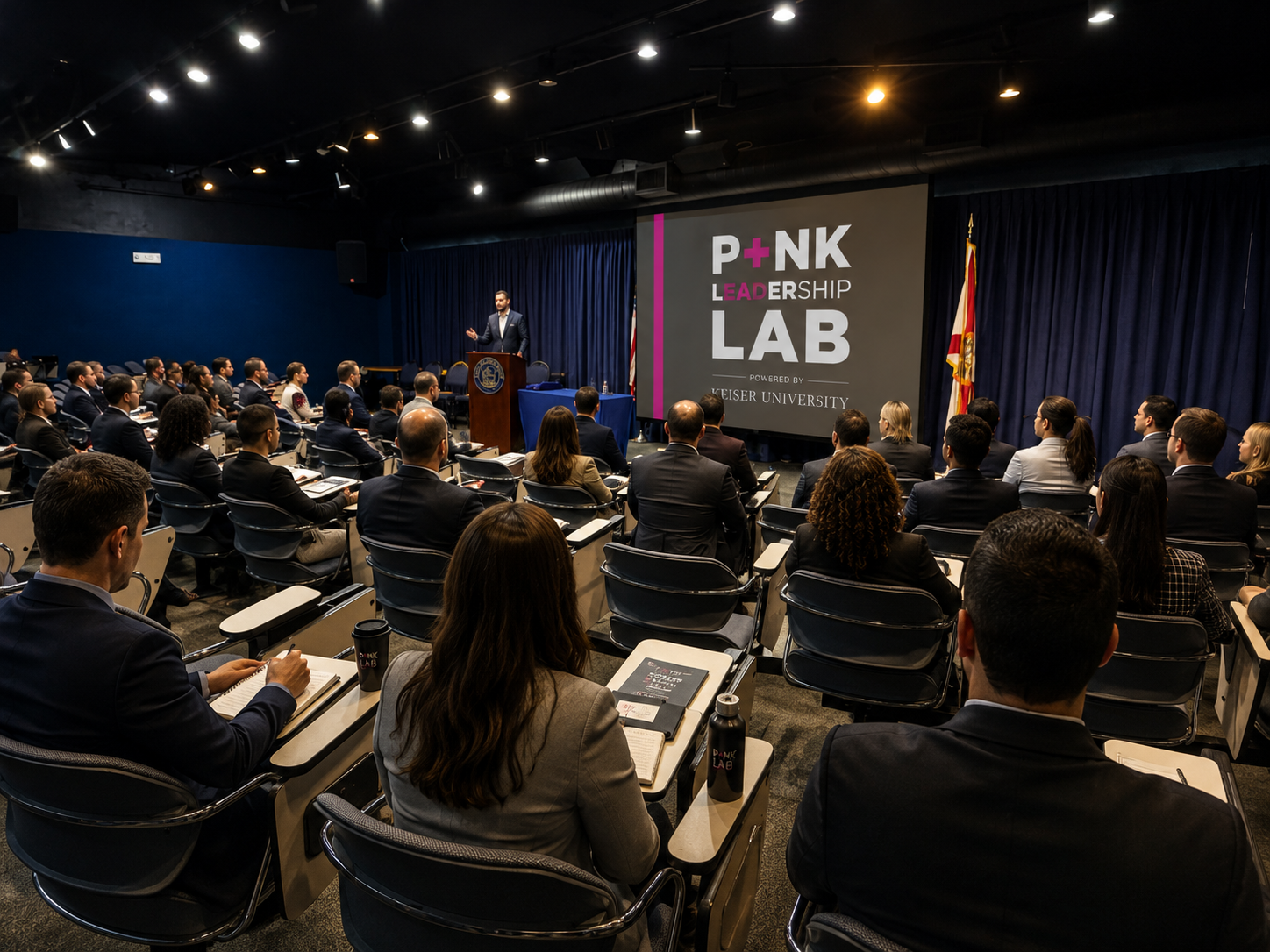
For 16 years, Pink Studio Central has helped organizations build stronger brands. We’ve developed strategies. Shaped stories. Created campaigns. Designed experiences. Somewhere along the way, we learned something that changed how we think about the work we do.
Just one more step to make your perfect choice. Click either button below to get started.